Wholesale Sellers Of Rotary Tiller, Agricultural Equipment.

In modern agriculture, preparing the soil properly before sowing seeds is vital for achieving good crop yields. The Cultivator is one of the most important farm implements designed for this purpose. It plays a crucial role in loosening and aerating the soil, controlling weeds, and mixing organic matter — all of which contribute to healthy crop growth.
A Cultivator is a mechanical implement used to stir, loosen, and aerate the soil around crops. Unlike ploughs that turn over the soil completely, cultivators only break the top layer, making them ideal for both primary and secondary tillage. They can be used before planting to prepare the soil or after crop emergence to remove weeds and maintain soil structure.
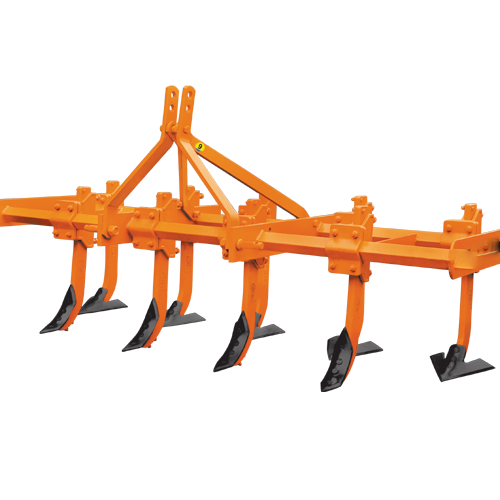
A Cultivator is an agricultural implement fitted with several shanks or tines that penetrate the soil. It is mounted or trailed behind a tractor and powered either by the tractor’s drawbar or hydraulics. The cultivator’s primary job is to loosen compacted soil, mix crop residues, and uproot weeds, thereby creating favorable soil conditions for seed germination and plant growth.
Cultivators are available in various designs — from traditional spring-loaded and rigid types to modern heavy-duty hydraulic cultivators — catering to the diverse needs of farmers.
Frame:
The main structural body that holds all components together. Usually made of high-tensile steel for durability and strength.
Tines (Shanks):
These are curved or straight blades that dig into the soil. The number of tines varies (typically 7 to 15) depending on the size and type of cultivator.
Shovel / Sweep:
Attached to the lower end of each tine, these metal parts perform the actual cutting and soil stirring.
Spring Assembly:
In spring-loaded cultivators, the springs absorb shocks from hitting stones or hard soil, preventing damage.
Hitch System:
Used for connecting the cultivator to a tractor — usually a three-point linkage system.
Depth Control Mechanism:
Allows the farmer to adjust how deep the tines penetrate into the soil, ensuring uniform cultivation.
Rigid Cultivator:
Fixed tines that do not move independently.
Suitable for light to medium soil types.
Provides deep tillage and soil loosening.
Spring-Loaded Cultivator:
Each tine is attached to a spring that absorbs shocks.
Ideal for rocky or uneven soil conditions.
Prevents damage and ensures consistent depth.
Heavy-Duty Cultivator:
Designed for deep and tough soil conditions.
Made with high-strength steel and reinforced frames.
Often used for commercial and large-scale farming.
Trailed Cultivator:
Pulled behind a tractor without mounting.
Suitable for large farms requiring wide coverage.
Power Cultivator (Rotary Type):
Operated by small engines or power tillers.
Used for small fields, orchards, or gardens.
Excellent Soil Loosening:
Breaks compacted soil layers, improving aeration and root penetration.
Effective Weed Control:
Removes unwanted weeds without harming crops, reducing dependence on herbicides.
Improved Moisture Retention:
Helps retain soil moisture by preventing crust formation.
Uniform Mixing:
Mixes fertilizers, compost, and crop residues evenly throughout the soil.
Versatility:
Can be used for both seedbed preparation and intercultural operations.
Fuel and Time Efficient:
Reduces the need for multiple passes of other implements, saving time and fuel.
Durable Construction:
Made from robust materials that ensure long operational life with minimal maintenance.
Soil Preparation: Loosens the soil before planting to make it friable and ready for seeds.
Weed Control: Destroys weeds by uprooting them or burying them in the soil.
Fertilizer Mixing: Ensures even distribution of manure or fertilizers across the field.
Intercropping Operations: Maintains soil health between crop rows by breaking the crust and improving aeration.
Land Leveling: Helps smooth the soil surface for irrigation and planting.